
Osmos Global Publication · Osmos Perspective
An Alert Is Not a Maintenance Outcome
Analytics creates value through verified correction, not the number of faults displayed.
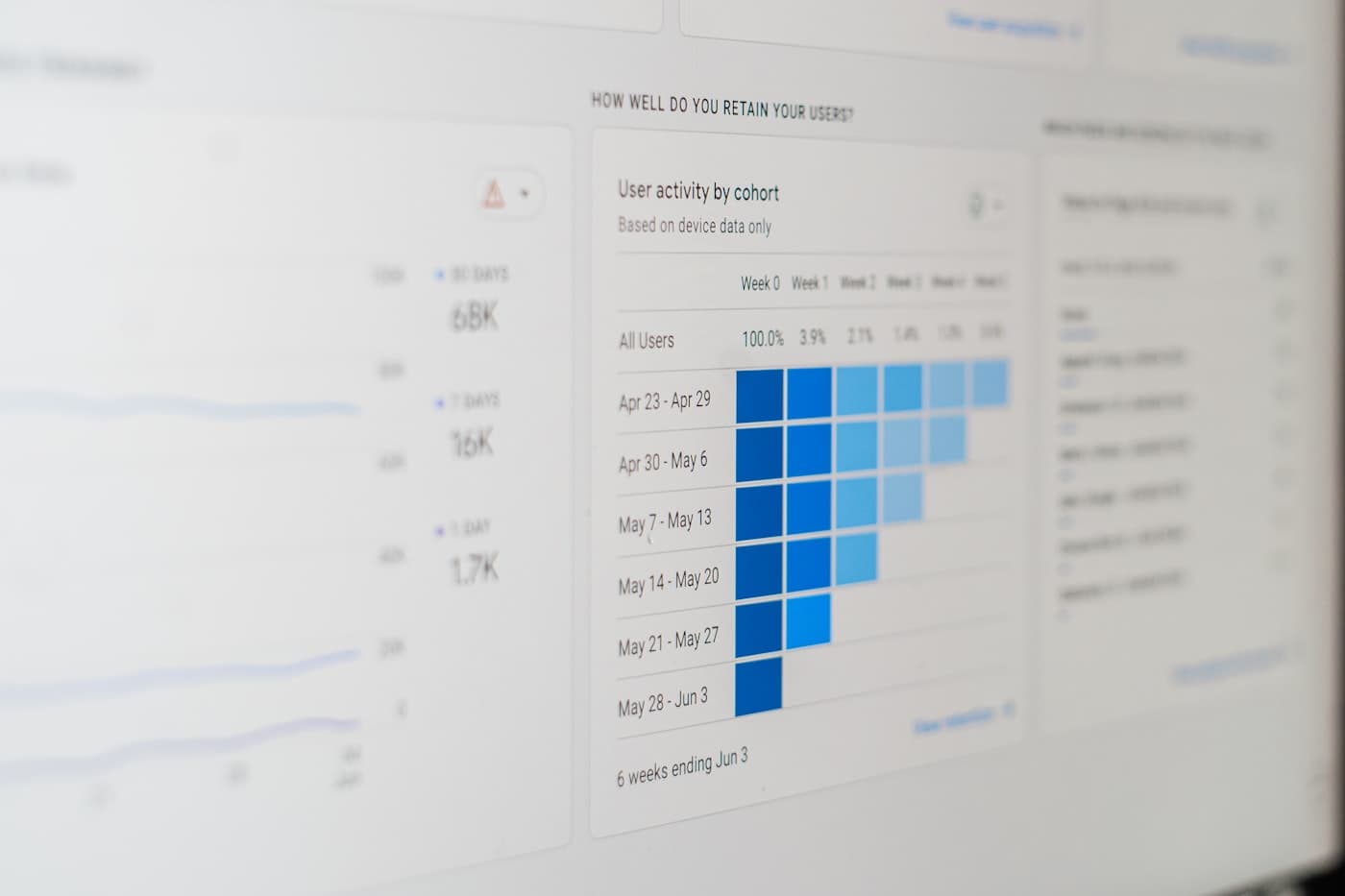
The gap between detection and correction
A fault-detection platform can produce a long list of technically plausible alerts. That list is a queue of hypotheses, not a record of avoided failures. A valve may appear stuck because its command and feedback disagree, but the cause could be a sensor, a control sequence, a mapping error or an actual mechanical defect. Treating every alert as a confirmed fault misstates both workload and value.
Hong and Li explain that classification performance needs more than one accuracy measure, including attention to false positives and false negatives [HONG]. NIST’s recovery guidance emphasises confirming restoration rather than assuming it [NIST]. Osmos applies these distinct ideas to maintenance: confidence in detection and confidence in correction require separate evidence.
Build a closed operational loop
The process should identify an anomaly, validate its context, assign an action, complete the intervention and verify the resulting condition. A persistent issue should return to investigation instead of disappearing into a closed ticket. The loop matters because work-order completion and physical restoration can occur at different times—or fail to coincide at all.
A technician might reset a controller and restore service without removing the underlying cause. Another might replace a component correctly, but the analytics platform could continue flagging the issue because its metadata was never updated. Linking the alert, work order and post-work observation helps distinguish both situations without blaming the wrong team.
Figure 1. The accountable operational loop Original Osmos Global conceptual framework, 2026. Not a measured dataset. Prepared 1 September 2026.
What this means: An alert earns value only through a verified operational outcome.
Prioritise by consequence and confidence
Alert priority should combine the possible operational consequence with evidence confidence and the practicality of response. A low-confidence indication affecting critical cooling can still require urgent human review. A high-confidence minor inefficiency may belong in a planned maintenance window. Neither energy ranking nor model confidence alone should determine the response.
Duplicate alerts also require treatment. One failing component may trigger several downstream symptoms.
Counting each symptom as a separate saving opportunity inflates the business case and burdens staff.
Grouping related observations around an asset or system lets engineers investigate the likely causal chain before dispatching several teams.
Make verification part of the work order
The corrective task should specify what will demonstrate restoration: a trend returning to an expected range, a functional test under the appropriate operating mode, or a qualified inspection. The method depends on the equipment and should be approved by the responsible engineer. A photograph of a replaced component may establish completion without establishing performance.
Set a sensible observation window and record operating conditions. An issue absent during shutdown may return under load. If verification cannot yet occur, use a distinct status such as awaiting performance confirmation. That status is more informative than either leaving all work open or prematurely declaring success.
Illustrative decision rehearsal
Imagine a fan-system alert appearing repeatedly after technicians have marked the related work orders complete. There are several plausible explanations: the repair did not address the cause, the fault is intermittent, the analytics rule is wrong or the point mapping no longer matches the equipment. The correct next step is investigation across those possibilities, not automatic escalation against the maintenance provider. This example is illustrative and contains no measured outcome.
Bring the relevant trend, work history and equipment context into one review. Check whether the post-repair observation was made under comparable conditions. If the rule was invalid, retain the reason for retiring it; if the fault remained, reopen the corrective process with a clear hypothesis. The aim is to improve the knowledge in the system rather than erase the alert.
During the first review cycle, choose a manageable group of alerts and follow each one through to a defensible conclusion. Include issues that were dismissed as well as those repaired. This reveals whether the service can distinguish false positives, inaccessible equipment, missing parts and genuinely unresolved faults.
The operating meeting should separate detection delay, investigation delay, action delay and verification delay. A long overall cycle can arise from very different constraints. Buying a faster analytics engine will not solve an access permit problem, and adding technicians will not correct a faulty mapping. A stage-by-stage view directs improvement toward the actual bottleneck.
Judge the system through completed learning
A useful review asks how many confirmed issues reached verified correction, how long each stage took, how often alerts recurred and which dependencies caused delay. The denominator must be explicit: all alerts, validated faults and completed interventions describe different populations. The organisation can improve each stage without pretending they are interchangeable.
The cited material does not establish a standard conversion rate from alerts to savings, and Osmos offers none. Benefits depend on fault severity, detection delay, existing maintenance and the chosen counterfactual. The immediate objective is a traceable operating process that can distinguish true improvement from an increasingly busy dashboard.
Source notes
[HONG] Tianzhen Hong and Han Li. Good practices for documenting AI-based studies on energy and buildings. Energy & Buildings / Elsevier; author copy hosted by Lawrence Berkeley National Laboratory, 2026-01-20. Sections 2, 3.1–3.6 and 4; pp. 1–4. DOI: 10.1016/j.enbuild.2026.117043. Accessed 1 September 2026. https://eta-publications.lbl.gov/sites/default/files/2026-06/1-s2.0-s0378778826001039-main.pdf [NIST] Alexander Nelson, Sanjay Rekhi, Murugiah Souppaya and Karen Scarfone. Incident Response Recommendations and Considerations for Cybersecurity Risk Management: A CSF 2.0 Community Profile. National Institute of Standards and Technology, 2025-04-03. Section 2; Table 2 GV.SC-05/08; Table 3 RC.RP. DOI: 10.6028/NIST.SP.800-61r3. Accessed 1 September 2026.
Editorial and visual note
This is original Osmos Global analysis informed by the cited publications. Reported findings are distinguished from Osmos recommendations and illustrative scenarios. Source findings and trademarks remain attributable to their owners. Original visual designs do not imply endorsement by source organisations. The content is general research and does not replace site-specific professional advice.
Cite this
Osmos Global Research & Knowledge Centre (2026). An Alert Is Not a Maintenance Outcome. Osmos Perspective, Osmos Global. https://www.osmosglobal.org/articles/an-alert-is-not-a-maintenance-outcome
Keep reading

Smart-Building Pilots Need an Operating Owner
An experiment becomes useful only when someone owns the decision it is meant to improve.
1 Sept 2026 · Osmos Global Research & Knowledge Centre · 5 min read
Sensor Coverage Is Not Data Quality
Connected points need identities, context and a known level of trust before they can support decisions.
1 Sept 2026 · Osmos Global Research & Knowledge Centre · 5 min read
Predictive Maintenance Must Beat a Fair Baseline
A model is valuable only if it improves the decision compared with a credible existing alternative.
1 Sept 2026 · Osmos Global Research & Knowledge Centre · 5 min read
Download this paper
The full PDF, formatted for circulation. Downloads are for members, so that we know who our research reaches.
Discussion
Add what you are seeing on the ground.