
Osmos Global Publication · Osmos Playbook
Project Management in Facility Management
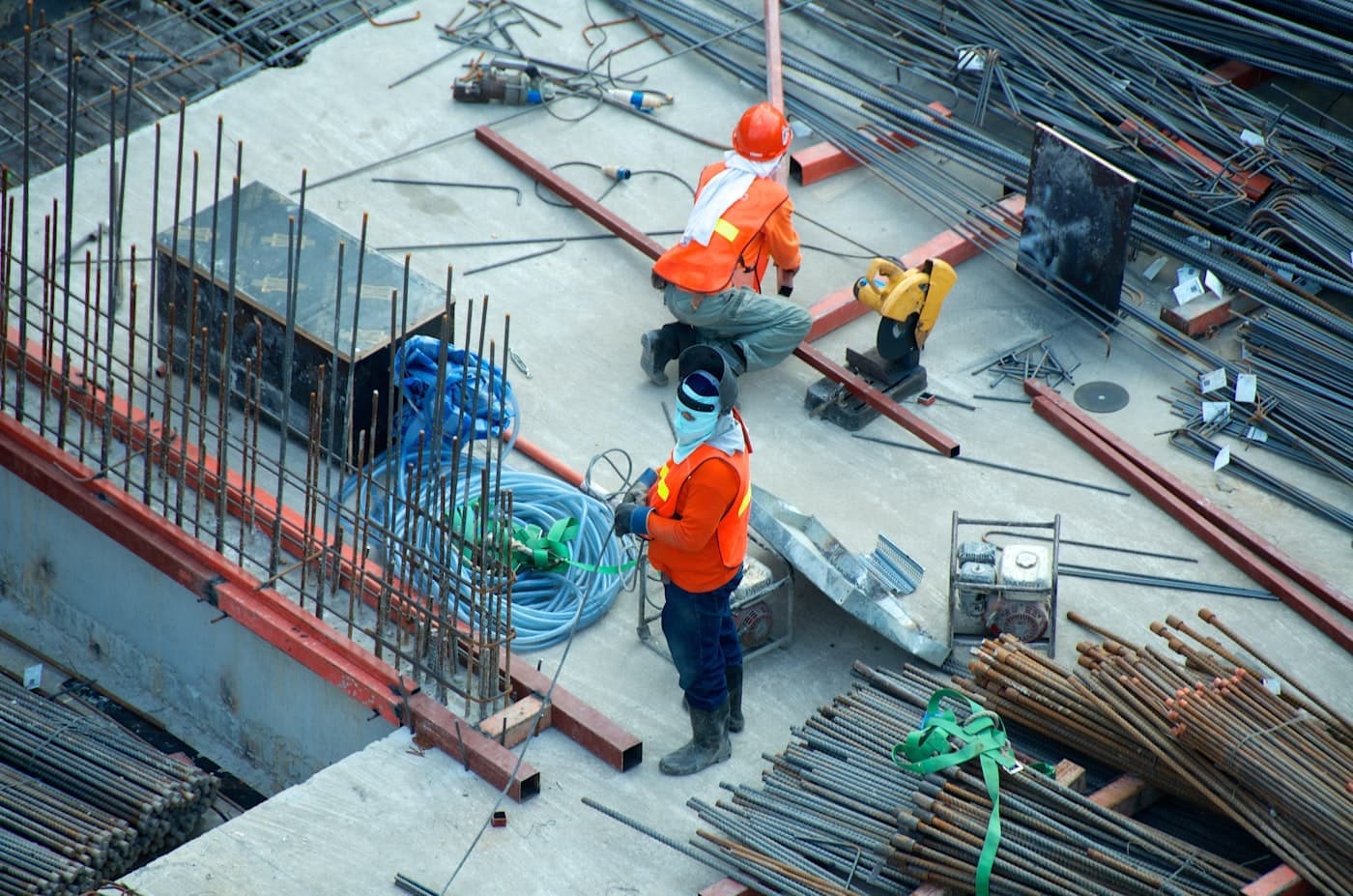
Fit-outs, retrofits and relocations turned the facility manager into a project manager. The five phases of a project, applied to Indian FM.
Preface: The "Projectized" Facility Manager
Welcome to the new reality. The days of the FM manager simply changing lightbulbs and managing housekeeping staff are gone. Today, the Indian FM market is valued at over USD 30 billion and is growing at a CAGR of 15%. This growth is driven by projects: fast-track fit-outs, sustainability retrofits, and tech integrations.
Your success will no longer be measured just by your "up-time" percentage but by your ability to deliver a new cafeteria fit-out under budget, relocate a 500-seat BPO within a 72-hour window, or implement an IoT-based HVAC system without disrupting business continuity.
You are transitioning from an Operator to a Project Leader. This guide will help with that transition.
Chapter 1: The Foundation — Introduction to Project Management
Learning objectives:
- Understand the role of projects in facility management.
- Learn key project management processes and models.
- Identify the responsibilities of a Facility Project Manager.
1.1 Projects vs. Operations in FM: The Schism
In facility management, we live in two worlds simultaneously. The "operational" world is about stability and efficiency. The "project" world is about chaos and delivery.
Projects are temporary endeavors undertaken to create a unique product, service, or result.
- Characteristics: Start and end dates, defined budget, specific scope, cross-functional team.
- Examples: Installing a 500 KVA generator, building a new cafeteria, relocating an entire floor to a new wing.
Operations are ongoing activities that sustain the business.
- Characteristics: Repetitive, continuous, stable process, managed by SOPs.
- Examples: Daily housekeeping, preventive maintenance of chillers, monthly fire alarm testing, security guard rotations.
The FM reality: It is easy to get sucked into operations. The fire alarm goes off, a toilet overflows, the HVAC trips — these emergencies dominate your day.
Critical insight: If you treat a project like an operation, it will fail. You cannot "maintain" a renovation. You must "execute" it.
1.2 Project Management Process: IPECC & The Agile Shift
The Project Management Institute (PMI) provides a global standard. In FM, we often adapt it. The classic model is IPECC:
- Initiation: Deciding if we should do it.
- Planning: Deciding how we will do it.
- Execution: Doing it.
- Monitoring & Control: Checking if we are doing it right.
- Closure: Wrapping up and handing it over.
Traditional (Waterfall) vs. Agile in FM:
- Waterfall: Sequential phases. You plan everything, then execute. Best for large infrastructure projects (e.g., building a new parking lot) where changes are costly.
- Agile: Iterative, sprints, continuous feedback. Best for tech integrations, software rollouts, or furniture fit-outs where the client wants to "see it" before finalizing.
Example: For a hospital upgrade, you must use Waterfall for the electrical backbone. But for the new nurse-call system software, you use Agile sprints to test and adapt the user interface without derailing the budget.
1.3 The Role of the Project Manager in FM
You are the "CEO" of this temporary project. You do not need to be the best electrician or HVAC expert. You need to be the best leader.
Key skills of an FM Project Manager:
- Leadership & communication (80% of the job): You must motivate vendors who don't report to you and manage occupants who are hostile to disruption.
- Budgeting & financial acumen: You must know not just the cost of materials, but the cost of downtime.
- Risk management (the "sword"): In India, risk mitigation isn't just an Excel sheet. It's knowing when the monsoon starts to plan the external painting, or knowing which authority has influence over the municipal water supply.
- Stakeholder management: This is the toughest in FM.
Stakeholder mapping:
- The occupants: They want zero noise, zero dust, zero inconvenience. They are your biggest critics.
- The vendors/contractors: They want to maximize their profit. They will cut corners if you don't monitor them.
- Senior management (the sponsors): They want it fast, cheap, and good. (You can only pick two — usually speed and quality.)
- The authorities: Fire, municipal, electricity boards. Your ability to navigate these relationships (or hire a good local liaison) defines your success.
Case Study 1: The "Silent" Saturday
A facility manager in Gurugram had to install a new 1000 KVA transformer. The process requires an 8-hour grid shutdown.
- Initial plan: Shutdown on Sunday (slow business).
- Reality: A critical trading floor operates 24/7. A 1-hour downtime costs ₹50 lakhs.
- PM solution: The Project Manager didn't just plan for the electricity work. He planned alternative power. He coordinated with the vendor for a massive DG sync, tested it a week prior, and chartered a bus to take non-essential staff to a co-working space.
- Result: 4-hour downtime. No trading halt. Stakeholders were satisfied because the PM communicated the risk and mitigation clearly in advance.
Chapter 2: Define Projects — Setting the Stage for Success
Learning objectives:
- Learn how to define FM project objectives and scope.
- Develop a Project Charter and Statement of Objectives (SOO).
2.1 Define Phase & Project Inputs
You get a call: "We need a new cafeteria."
A junior PM says: "Okay, let's look at seating layouts." A senior PM says: "Why do we need a new cafeteria?"
Identifying the business need. The project must align with the organization's strategy.
- Compliance: "We need to install fire sprinklers by December to comply with the new by-law."
- Efficiency: "Our chiller is 20 years old; we need a new energy-efficient one to reduce energy bills by 30%."
- Expansion: "We are hiring 200 people; we need to build a new wing to house them."
- Brand image: "We need to upgrade the lobby to impress visiting clients."
Gathering stakeholder requirements. This is the "wish list" phase.
- Facilities team: "We need easy access to maintenance panels."
- Finance: "We need to keep it under ₹50 lakhs."
- HR: "We need natural lighting and a modern look."
- IT: "We need power and LAN points at every table."
Tool: Use interviews and questionnaires to build this list.
2.2 Project Charter Development
This is your "license to spend." Without a charter, you are just a guy with a wrench. The Project Charter formally authorizes the project.
Components of a charter:
- Project purpose/justification: Why are we doing this? (Business case)
- Scope description: What is in? What is NOT in?
- Deliverables: What are we producing? (E.g., a 100-seat cafeteria with a servery.)
- Risks: Major initial risks (e.g., "Approval from the local municipal authority is pending").
- Budget: The preliminary budget range.
- Key stakeholders: Sponsor, PM, core team.
The approval process in Indian organizations. In India, hierarchy is crucial:
- If the budget is less than ₹10 Lakhs: the Head of Admin can approve.
- If the budget is between ₹10L–₹50L: the CFO or COO must approve.
- If the budget is above ₹50L: the Board or CEO must approve.
Your job: Get the Sponsor to sign the Charter. If they don't sign, you don't start.
2.3 Statement of Objectives (SOO)
While the Charter is the "why," the SOO is the "what" measured in objective terms.
Defining measurable success criteria (KPIs). You must move from subjective to objective.
- Bad: "The cafeteria must be cool." (Subjective)
- Good: "The cafeteria must maintain a temperature of 22–24°C at 100% seating capacity." (Objective)
Aligning with goals. If the organizational goal is to reduce energy costs by 15%, your SOO must state a KPI like: "The new cafeteria must consume less than 15 kWh/sq ft per year."
Case Study 2: The "Scope Creep" Relocation
A corporate FM team was tasked to relocate the HR department to the 5th floor.
- Charter: Move 50 HR staff to the 5th floor (already empty).
- SOO: "Complete relocation within 3 days with zero downtime for HR services."
- The creep: On day 2, the HR Head said, "Since we are moving, can we change the carpet and paint the walls?"
- The PM's mistake: He said "yes" to be helpful.
- The result: Schedule delayed by 1 week, budget overshot by 20%, and the HR Director was unhappy anyway because the smell of paint affected the staff.
Lesson learned: When the client asks for more, you don't say "no." You say, "Yes, we can do that. Let me issue a Change Request so we can assess the time and cost impact." This forces the client to prioritize their requests.
Chapter 3: Plan Projects — The Blueprint for Delivery
Learning objectives:
- Develop a Project Management Plan (PMP).
- Allocate resources and design deliverables.
3.1 Designing Deliverables — The WBS (Work Breakdown Structure)
This is the single most important tool to prevent chaos. If you cannot break it down, you cannot build it up.
The WBS is a "deliverable-oriented" hierarchical decomposition of the work. It is not the schedule; it is a list of everything that has to happen.
Example — WBS for a conference room AV upgrade:
- Project initiation — 1.1 Charter sign-off; 1.2 AV vendor selection
- Procurement — 2.1 Purchase 85" display; 2.2 Purchase audio system; 2.3 Purchase control system
- Civil works — 3.1 Conduit laying for cables; 3.2 Ceiling mounting bracket installation; 3.3 Painting touch-up
- AV installation — 4.1 Mount display; 4.2 Install speakers; 4.3 Cable management and connectivity; 4.4 System configuration
- Testing & handover — 5.1 Run diagnostics; 5.2 User training for staff; 5.3 Sign-off by IT Director
3.2 The Project Management Plan (PMP) & Tools
The PMP is the master document. It's how you steer the ship.
Components:
- Scope baseline: The approved WBS.
- Schedule baseline: The timeline.
- Cost baseline: The budget.
- Risk register: The list of potential problems and responses.
- Communication plan: Who gets what info and when.
Tools of the trade:
- Gantt charts: Visual bars showing tasks against time. (Great for presentations to senior management.)
- Critical Path Method (CPM): This is the secret weapon. CPM calculates the longest stretch of dependent activities. If a task on the critical path is delayed, the whole project is delayed.
Example: For a new data center setup — Task A: laying the floor (5 days). Task B: installing racks (3 days), dependent on A. Task C: cabling (4 days), dependent on B. Critical path: A → B → C (total 12 days). If the floor takes 7 days, the project is now 14 days total. You know exactly where to focus your pressure.
3.3 Resource & Team Planning
Staffing — in-house vs. outsourced:
- In-house: You have to manage unions, holidays, and shift rotations. They know the building, but they may lack the "expertise" for new tech.
- Outsourced: You get specialized skills, but you pay a premium. You also need to manage their manager.
Budget estimation techniques:
- Top-down: Senior management says, "We have ₹20 Lakhs for this." You figure out how to spend it to meet the scope. (Risk: scope may not fit the budget.)
- Bottom-up: You estimate the cost of every piece of steel and cement, add them up, and add a contingency. (Risk: you might blow the budget; you need to justify every paisa.)
Recommendation: Always use bottom-up for execution, but validate it against top-down to ensure you are in the ballpark.
Chapter 4: Manage & Oversight — The Art of Execution
Learning objectives:
- Learn project execution strategies.
- Monitor progress and implement control mechanisms.
4.1 Acquiring Team & Resources — The Vendor Side
Vendor selection & contract management. In India, the cheapest bidder is often the most expensive after the project is over (due to delays and rework).
Avoid the "L1" trap:
- Technically qualified: Check their track record (they built a hospital? Good. A data center? Maybe not).
- Financially stable: Can they survive 90-day payment cycles?
- Past performance: Talk to their previous clients.
Procurement strategies in India:
- Limited tendering: Shortlist 3–5 known vendors.
- Open tendering: Advertise publicly (preferred for Govt/PSUs).
- Single tender: Emergency situations (only if absolutely necessary).
4.2 Project Execution & Handling Change
You have the plan. Now the contractor is putting screws in the wall. This is the "muddy" phase.
Managing work schedules:
- Shift planning: You cannot break the AC during peak summer. So you schedule HVAC maintenance for 11:00 PM to 5:00 AM.
- Safety compliance: This is non-negotiable. As a PM, if a worker falls off a scaffold, you are liable.
Handling change requests. This is the "scope creep" we discussed earlier. The rule: no changes without a change order.
- If the client wants a change: get it in writing.
- Assess the impact (cost, time).
- Get the signature before you lift a finger.
4.3 Monitoring & Controlling
If you aren't measuring, you aren't managing.
Key performance indicators (KPIs):
- Schedule Variance (SV): Are we on time? Formula: Earned Value (EV) − Planned Value (PV).
- Cost Variance (CV): Are we on budget? Formula: Earned Value (EV) − Actual Cost (AC).
Risk mitigation strategies:
- Avoid: Change the plan to eliminate the risk (e.g., don't store expensive material on site to avoid theft).
- Transfer: Buy insurance or make the contractor responsible.
- Mitigate: Reduce the probability (e.g., inspect materials before they leave the factory).
- Accept: Acknowledge the risk and have a contingency plan (e.g., keep ₹2 Lakhs aside for "unforeseen monsoon damage").
Chapter 5: Close Projects — The Final Pass
Learning objectives:
- Understand project closure processes.
- Evaluate project success and lessons learned.
5.1 Accepting Deliverables — The Snag List
Never accept a building "as is." You must verify the quality.
Quality checks:
- Snagging: Walk through the project with a checklist. Mark every defect (e.g., uneven tile, paint dripping, low water pressure).
- Compliance verification: Check fire exit signs, emergency lighting, and exhaust systems against the NBC (National Building Code) guidelines.
Handover documentation (crucial!): You need:
- As-built drawings: The "final" AutoCAD drawings. If the contractor moved a pipe, it must be documented here.
- Warranties: Compile the warranty cards for all equipment (chillers, pumps, generators).
- Operation manuals: How to run the BMS (Building Management System).
5.2 Occupying Space — The Logistics
Moving 300 people into a new office is a project in itself.
Moving logistics:
- IT first: The network is the lifeline.
- Furniture: Label everything.
- Employees: Create an escort schedule. Don't let people wander into unfinished areas.
Post-Occupancy Evaluation (POE). A few months after moving, survey the occupants: Does the AC work well? Is the lighting sufficient? Address comfort complaints quickly — this is where you build trust.
5.3 Project & Contract Closure
Final payments & sign-offs:
- Get the contractor to sign a "Release of Liability."
- Ensure all statutory payments (PF, GST) are accounted for to avoid tax issues later.
5.4 Evaluating Outcomes
Lessons learned (the retrospective). This is the highest value activity. Get the team (vendors, in-house staff, IT) in a room:
- What went well? (The DG synchronization worked great.)
- What went wrong? (The flooring delivery was late.)
- What will we do next time? (We will place the order 2 weeks earlier.)
Measuring ROI:
- Did the new generator save fuel costs? Calculate it.
- Did the new fit-out attract better talent? Track the cost per hire.
Cite this
Osmos Global Research & Knowledge Centre (2026). Project Management in Facility Management. Osmos Playbook, Osmos Global. https://www.osmosglobal.org/knowledge/project-management-in-facility-management
Keep reading
From Smart Buildings to Accountable Operations
An evidence-led operating model for AI, building analytics and workplace technology
1 Sept 2026 · Osmos Global Research & Knowledge Centre · 14 min read
Beyond the SLA
Designing FM contracts for reliability, experience and long-term value
1 Sept 2026 · Osmos Global Research & Knowledge Centre · 19 min read

The Hybrid Workplace Measurement Gap
A decision framework for separating attendance, occupancy, utilisation, compliance and workplace effectiveness
27 Aug 2026 · Osmos Global Research & Knowledge Centre · 9 min read
Download this paper
The full PDF, formatted for circulation. Downloads are for members, so that we know who our research reaches.
Discussion
Tell us where this matches what you see in your portfolio, and where it does not. Replies are welcome.