
Osmos Global Publication · Osmos Perspective
AI Energy Savings Need a Defensible Counterfactual
Lower consumption is not proof that an algorithm caused the reduction.
The weather can win the pilot
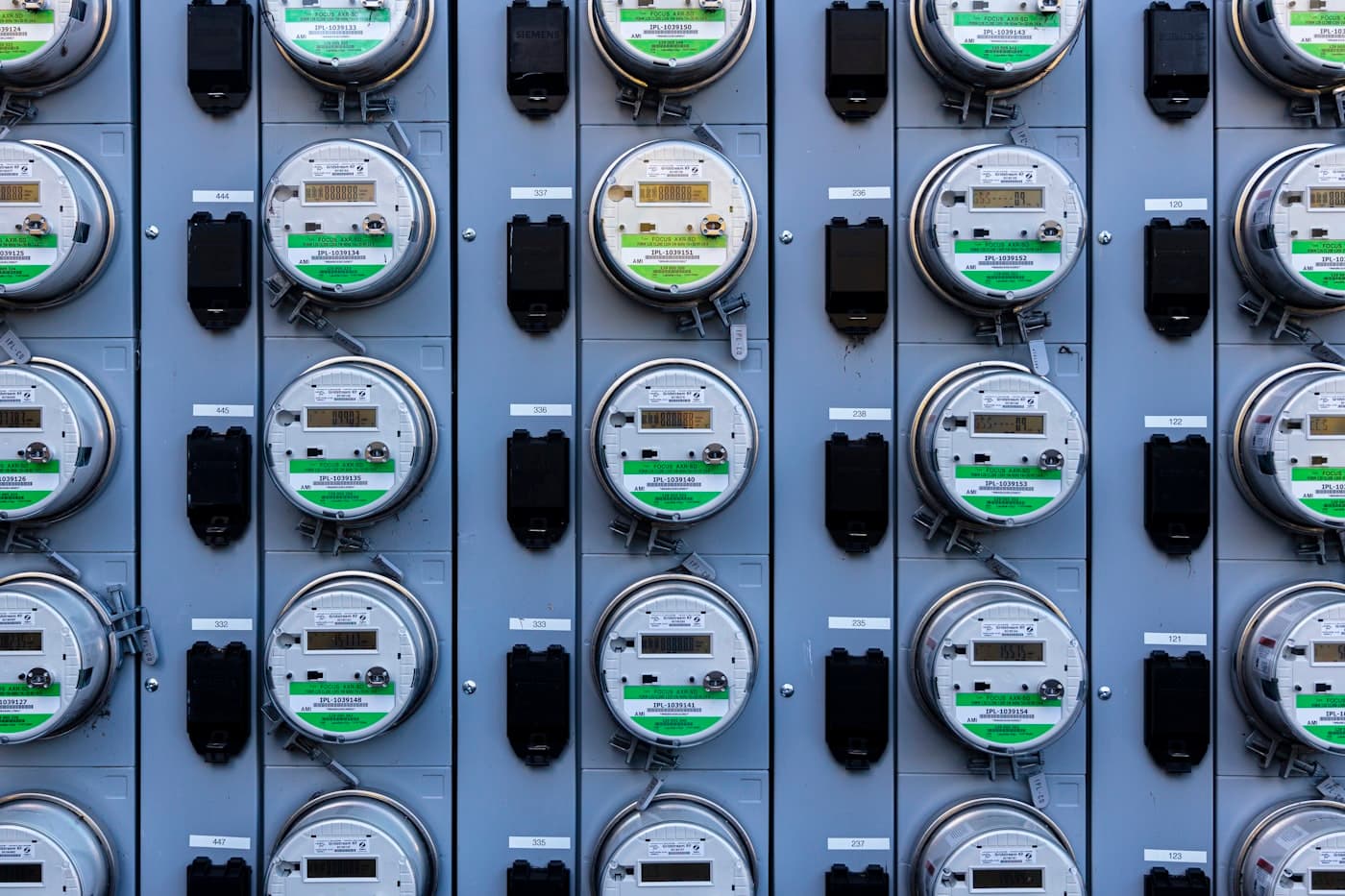
An energy-management pilot can coincide with milder weather, reduced occupancy, shorter operating hours or a repaired mechanical fault. Consumption may fall, but the algorithm cannot claim every change. The question is what energy use would reasonably have been under comparable conditions without the intervention. That is the counterfactual the business case must address.
IEA’s Energy and AI discusses potential optimisation benefits while recognising barriers and uncertainty in wider adoption [IEA]. Hong and Li emphasise adequate testing and documentation in building-AI research [HONG]. Neither source gives an automatic savings percentage for a building that installs new software.
Agree the boundary before testing
Specify which meters, systems, periods and energy carriers are included. Whole-building electricity, HVAC electricity, thermal energy and peak demand answer different questions. A reduction in cost caused by a tariff change is not the same as a reduction in consumption. Report both if relevant, but do not merge them into an unexplained benefit.
Record changes that can influence the result: occupancy, operating schedules, equipment replacement, setpoint changes, weather and floor area. Keep the register through the test rather than reconstructing it from memory at the end. The most sophisticated model cannot compensate for a missing account of what actually changed.
Figure 1. The accountable operational loop Original Osmos Global conceptual framework, 2026. Not a measured dataset. Prepared 1 September 2026.
What this means: An alert earns value only through a verified operational outcome.
Preserve service conditions
Energy performance is one objective among several. A control strategy that reduces cooling by tolerating unacceptable conditions may transfer cost to employees or operations. Comfort, indoor environmental requirements, equipment protection and critical process limits need explicit guardrails selected by qualified professionals.
The result should show whether those guardrails were met throughout the evaluation. Where the system curtailed service, describe it. Where occupants or engineers repeatedly overrode the strategy, investigate why. Excluding inconvenient periods without explanation can make an apparently strong energy result operationally misleading.
Use a method proportionate to the claim
A preliminary trial can demonstrate integration and identify opportunities. A financial commitment based on annual savings needs stronger measurement, a suitable comparison period and treatment of uncertainty.
Choose the method with an energy specialist before the intervention begins, and document why it fits the available data and the scale of the claim.
Compare against a credible existing control strategy, not an intentionally inefficient starting point. If routine recommissioning produces the same improvement, the incremental value of AI may be small. That does not invalidate the project; it changes which activity deserves credit and what should be purchased next.
Illustrative decision rehearsal
Consider an illustrative office where electricity falls during an AI trial but a major business unit simultaneously moves to remote work. The reduction is real; attributing all of it to the controller would not be. A second office may show little overall change even though the controller helped offset a period of unusually severe weather. Raw before-and-after totals can mislead in either direction.
The energy reviewer should document the changed conditions and decide whether the original evaluation method remains suitable. If not, the claim may need to be narrowed, the trial extended or the comparison redesigned. A responsible report can state that integration worked while the savings effect remains unresolved.
During the first operating cycle, pair the energy time series with the operational change log. Review intervals that appear exceptional before excluding them. Exclusions need a consistent rule, not a preference for favourable results. Keep the original data so another reviewer can reconstruct the calculation.
At the investment review, show the measured period, the adjusted comparison where used and the uncertainty around the result. State who approved the method and which costs are included. This approach may produce a less dramatic headline than a simple percentage, but it gives finance and operations a result they can defend when conditions change or a supplier’s guarantee is questioned.
Report net value and persistence
Deduct platform, integration, sensor maintenance, engineering review and ongoing assurance costs from the relevant financial benefit. Report gross energy effects separately so the calculation is traceable. Avoid extrapolating one favourable month across a year without accounting for seasonal operating modes.
Finally, verify persistence. Setpoints can drift, schedules can change and staff can abandon an inconvenient workflow. A savings claim should state the period actually observed and the assumptions used for anything beyond it. Osmos recommends treating verified persistence as an operating responsibility, not a closing slide in the supplier’s pilot presentation.
Source notes
[IEA] International Energy Agency. Energy and AI. IEA, Paris, 2025-04-10. Executive summary; Energy demand from AI; AI for energy optimisation and innovation. Accessed 1 September 2026.
https://www.iea.org/reports/energy-and-ai
[HONG] Tianzhen Hong and Han Li. Good practices for documenting AI-based studies on energy and buildings. Energy & Buildings / Elsevier; author copy hosted by Lawrence Berkeley National Laboratory, 2026-01-20. Sections 2, 3.1–3.6 and 4; pp. 1–4. DOI: 10.1016/j.enbuild.2026.117043. Accessed 1 September 2026. https://eta-publications.lbl.gov/sites/default/files/2026-06/1-s2.0-s0378778826001039-main.pdf
Editorial and visual note
This is original Osmos Global analysis informed by the cited publications. Reported findings are distinguished from Osmos recommendations and illustrative scenarios. Source findings and trademarks remain attributable to their owners. Original visual designs do not imply endorsement by source organisations. The content is general research and does not replace site-specific professional advice.
IEA data attribution: IEA (2025), Energy and AI, IEA, Paris. Licence: CC BY 4.0 (https://creativecommons.org/licenses/by/4.0/). Visuals are newly designed by Osmos; any calculation is identified in its caption.
Cite this
Osmos Global Research & Knowledge Centre (2026). AI Energy Savings Need a Defensible Counterfactual. Osmos Perspective, Osmos Global. https://www.osmosglobal.org/articles/ai-energy-savings-need-a-defensible-counterfactual
Keep reading

Smart-Building Pilots Need an Operating Owner
An experiment becomes useful only when someone owns the decision it is meant to improve.
1 Sept 2026 · Osmos Global Research & Knowledge Centre · 5 min read
An Alert Is Not a Maintenance Outcome
Analytics creates value through verified correction, not the number of faults displayed.
1 Sept 2026 · Osmos Global Research & Knowledge Centre · 5 min read

Sensor Coverage Is Not Data Quality
Connected points need identities, context and a known level of trust before they can support decisions.
1 Sept 2026 · Osmos Global Research & Knowledge Centre · 5 min read
Download this paper
The full PDF, formatted for circulation. Downloads are for members, so that we know who our research reaches.
Discussion
Add what you are seeing on the ground.