
Osmos Global Publication · Osmos Perspective
Focus Space Is a Strategic Workplace Resource
An office that supports connection but obstructs concentration remains incomplete.
Evidence context
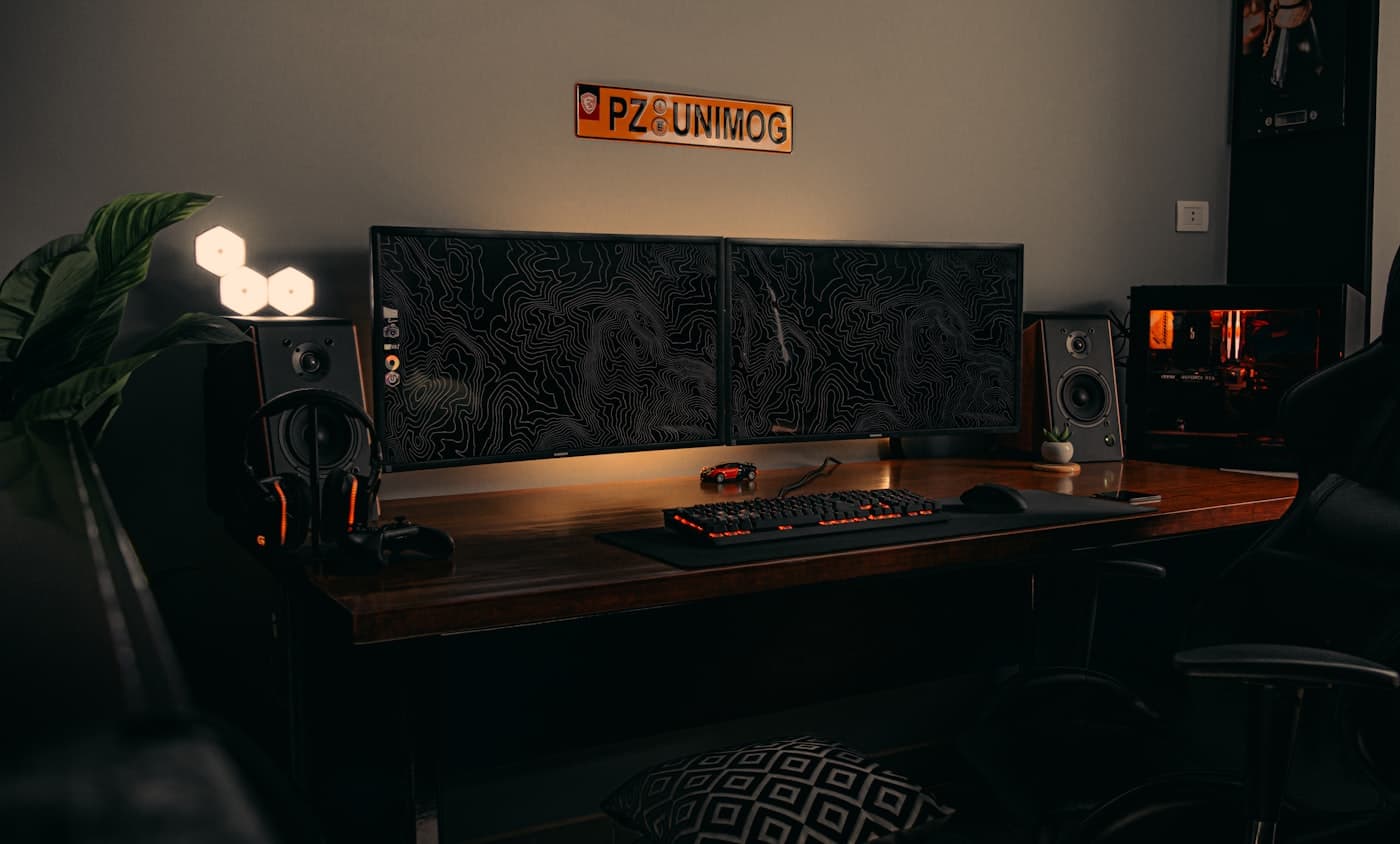
Gensler’s 2025 findings identify availability, noise and usability as continuing workplace challenges. Forty per cent of surveyed workers prioritised natural light and operable windows, while 36% preferred environments enhanced with greenery.
The office’s social purpose has become more important, but knowledge work still contains tasks requiring sustained attention, privacy or cognitive recovery. If focus settings are scarce, employees improvise through headphones, empty meeting rooms or location avoidance.
Osmos Global analysis
Focus support should be planned as capacity, not decoration. Teams need quiet areas, enclosed rooms, behavioural norms and reliable information about availability. Environmental quality—light, air, temperature and acoustic control—affects whether those settings remain usable.
A focus strategy is compatible with collaboration. The goal is a workplace that supports transitions between individual and collective modes without forcing one to undermine the other.
What this changes for decision-making The practical significance of “Focus Space Is a Strategic Workplace Resource” is that workplace decisions must be framed as testable operating choices rather than expressions of preference. Leaders should identify the affected workforce, the work moment being improved, the constraint being removed and the evidence that would justify further investment. This prevents a global survey average from becoming a local design instruction and makes the decision transparent to finance, employees and operational teams.
The decision record should also include trade-offs. More collaboration space may reduce focus capacity; higher service coverage may increase operating cost; stronger attendance coordination may reduce individual flexibility; and greater data precision may create privacy concerns. A credible workplace strategy does not hide these tensions. It states which outcome has priority, which safeguards apply and when the choice will be reconsidered.
Leadership implications
Workplace, FM, CRE, HR and technology leaders should treat this issue as a connected operating decision. The objective is not to maximise attendance, satisfaction or space efficiency independently; it is to create an environment that supports defined work while using capital and services responsibly. Business leaders remain responsible for specifying the outcomes that workplace investment is expected to enable.
Implementation guidance
Begin with one workforce segment, location or recurring moment where the present experience can be reconstructed. Record employee perception, actual demand, environmental or service conditions and the business purpose of the setting. Design a bounded intervention, establish the expected evidence before launch, and compare the result across peak and normal periods. Scale only when the improvement is repeatable and material.
What the evidence does not prove
The cited research does not demonstrate that the proposed action will increase individual productivity, prevent resignation or produce a specific financial return. Survey respondents describe experiences, preferences and
Practical actions
• Measure demand for confidential and concentrated work. • Protect quiet zones through behavioural standards. • Track meeting-room use for solo work as a diagnostic signal. • Include environmental conditions in experience reviews.
Risks, limitations and unresolved questions Preferences for natural elements and control are survey findings, not proof of a specific productivity effect or universal design prescription.
Source notes
[1] Gensler Research Institute. Global Workplace Survey 2025. 23 April 2025. https://www.gensler.com/gri/global-workplace-survey-2025
Cite this
Osmos Global Research & Knowledge Centre (2026). Focus Space Is a Strategic Workplace Resource. Osmos Perspective, Osmos Global. https://www.osmosglobal.org/articles/focus-space-is-a-strategic-workplace-resource
Keep reading

Smart-Building Pilots Need an Operating Owner
An experiment becomes useful only when someone owns the decision it is meant to improve.
1 Sept 2026 · Osmos Global Research & Knowledge Centre · 5 min read
An Alert Is Not a Maintenance Outcome
Analytics creates value through verified correction, not the number of faults displayed.
1 Sept 2026 · Osmos Global Research & Knowledge Centre · 5 min read

Sensor Coverage Is Not Data Quality
Connected points need identities, context and a known level of trust before they can support decisions.
1 Sept 2026 · Osmos Global Research & Knowledge Centre · 5 min read
Download this paper
The full PDF, formatted for circulation. Downloads are for members, so that we know who our research reaches.
Discussion
Add what you are seeing on the ground.